

What historical monuments in Gdansk are worth seeing?
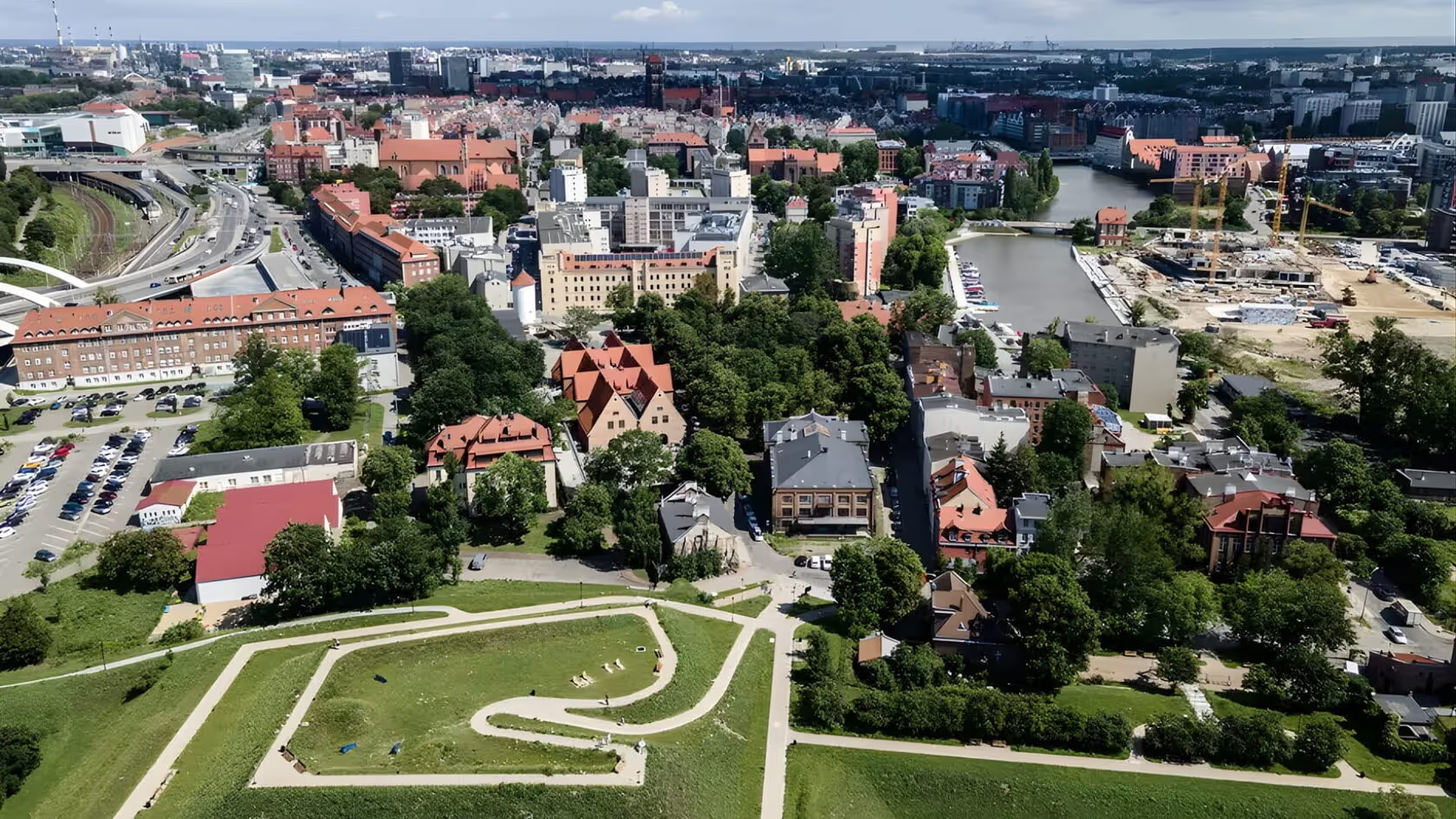
The Long Market with the Fountain of Neptune and the majestic St. Mary's Basilica are inscribed in the memory of everyone who visits the city. However, its authentic character manifests itself elsewhere — in the secluded churches of the Old Town, among the green bastions, in the narrow streets of the Old Przedmieście. Centuries of history have shaped Gdańsk — from Hanseatic times through its heyday to the dramatic events of the 20th century. Each era has left its mark here. We have prepared a guide to places that are less often found on tourist routes, although they are key pieces of the puzzle of Gdańsk's past.
Historic churches of Gdańsk outside St. Mary's Basilica
St. Catherine's Church
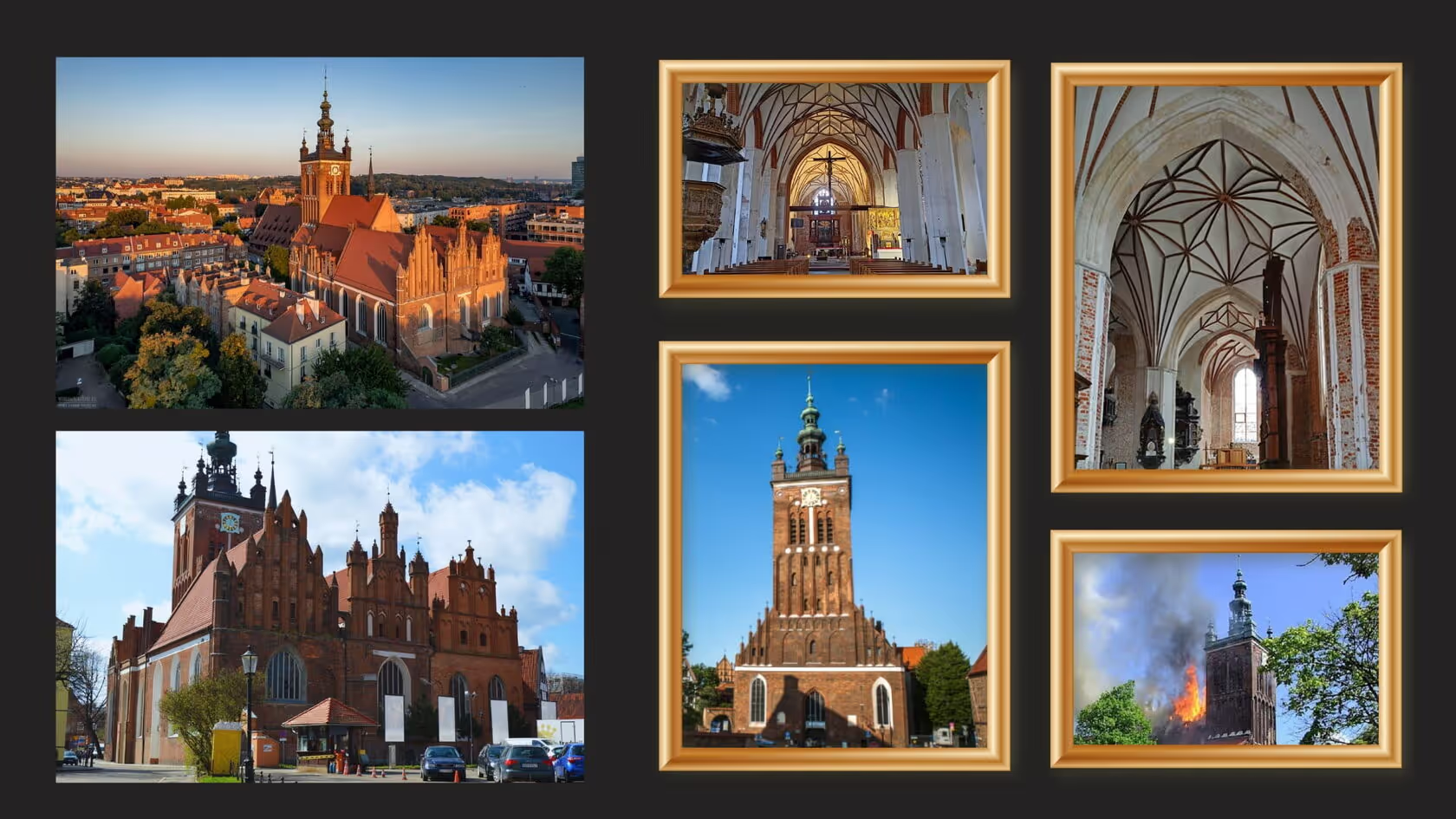
At Profesorska Street there is a church whose foundations still remember the times of the first Pomeranian princes. The Church of St. Catherine, erected in the years 1227-1239, is the oldest parish church in Gdańsk. For medieval residents of the Old Town, it was what St. Mary's Basilica is for us today, that is, the heart of religious life.Saint Catherine of Alexandria even became the patroness of the whole city, and her image adorned the city seals. Just look up to see the 76-meter tower topped with a baroque helmet, a work of Jacob van den Block from 1634. The same family workshop of van den Blocks left its mark in many places of Gdańsk, contributing to the unique character of the city. Inside the church there is a surprise for music lovers. A carillon consisting of 50 bells with a total weight of more than 17 tons was hung in the tower. An automatic melody also breaks out every hour, echoing over the rooftops of the Old Town. On the top floors of the tower is the Museum of Tower Clocks - a branch of the Historical Museum of the City of Gdańsk, where historical mechanisms from all over the region were collected. The church survived two great fires. In 1905, from a lightning strike, the tower's helmet caught fire, and in 2006 the fire consumed almost the entire roof. Each time the people of Gdańsk gathered their strength and rebuilt their oldest temple. John Heweliusz, a famous astronomer and mayor of Gdańsk, rests in the chancel. His epitaph from 1659 reminds us that Gdańsk was once one of the most important centres of science in Europe.
St Bridget's Church
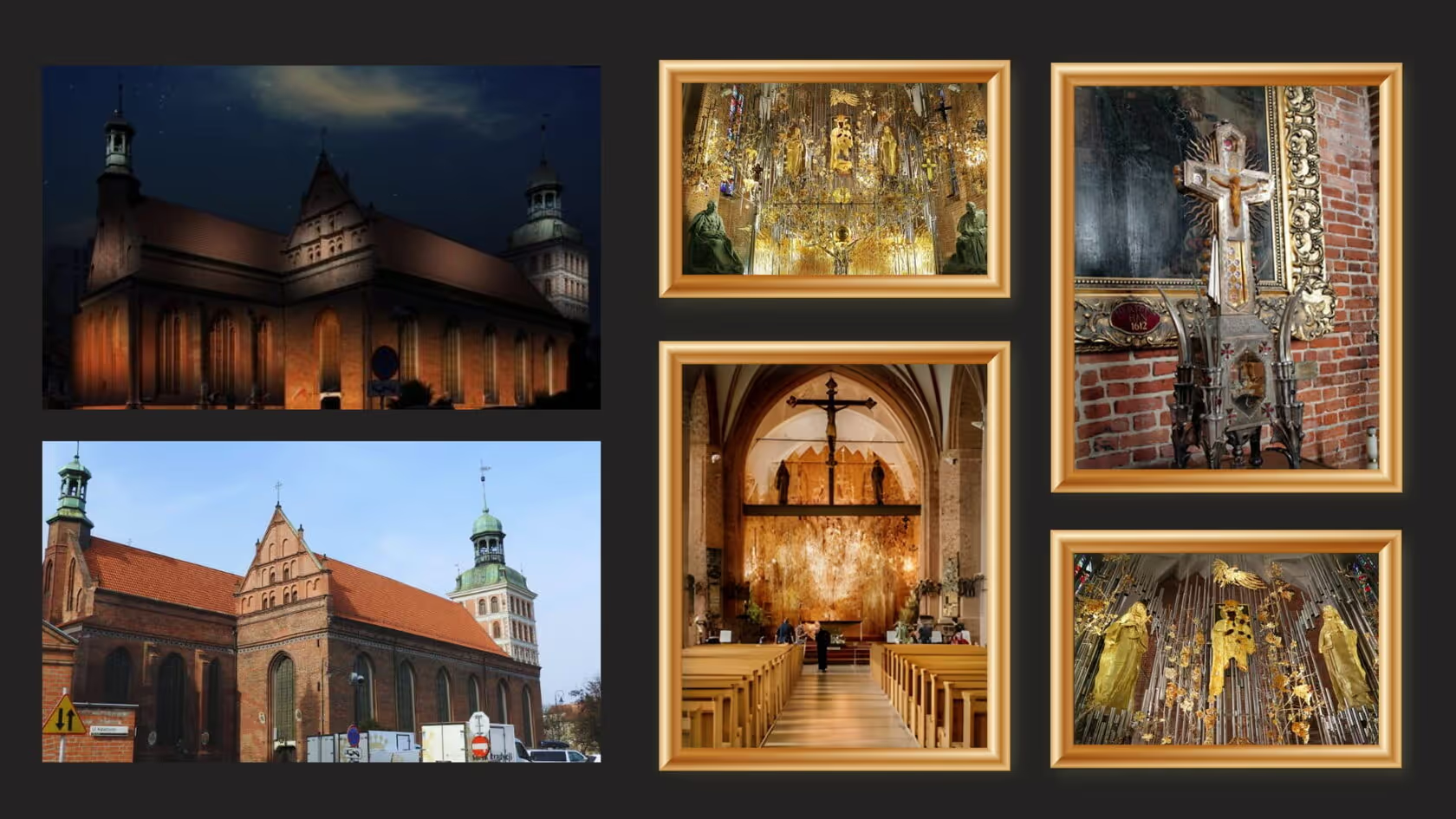
Right next to St. Catherine's Church, at 17 Profesorska Street, stands a church with an even more fascinating history. The Church of St. Bridget began its history as a modest chapel of penitents (the so-called Magdalene) around 1350. These women with a difficult past found refuge here and a chance for a new life.In 1396, the monastery of the Order of the Most Holy Savior was officially erected here - the first branch of the Order of Brigid outside Scandinavia. The construction of the monastery church lasted more than a hundred years, until 1512. The temple went through various turmoil of history — fires, reformations, Prussian secularization. In 1817, the Prussian authorities abolished the order, and the last of the brigadier sisters died in 1885. The most difficult time came in 1945. After the liberation of the city by Soviet troops, the church was almost completely destroyed. For decades it stood in ruins, and in 1957 and 1969, successive fires destroyed what was still left. Only in 1970 it was handed over to the diocese, and Father Henryk Jankowski was appointed pastor. And here begins the second modern history of this place. In August 1980, during the strikes in the Gdańsk Shipyard, the church of St. Bridget became a spiritual retreat for the workers. Father Jankowski celebrated masses for the strikers, and in the rectory the opposition met with guests from abroad. The Church has gone down in history as the Church of Solidarity. A monumental amber altar is currently under construction — a work to commemorate the workers who died in December 1970. This church is a perfect complement to our guide to unusual attractions of Gdańsk. The church combines deep medieval piety with the recent history of the struggle for freedom.
Church of the Holy Trinity
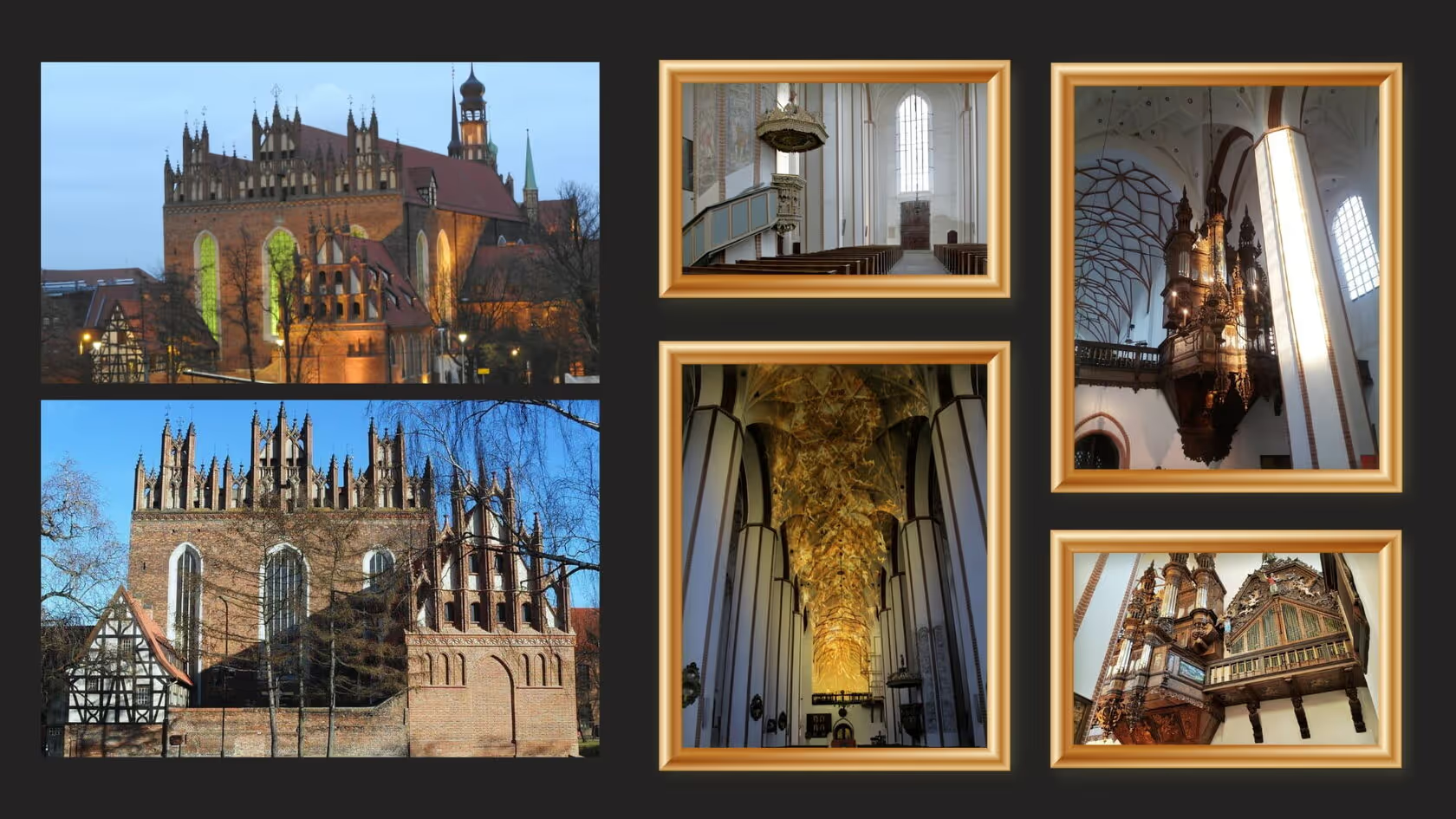
Walking through the Old Suburb, it is difficult to pass indifferently past the massive body of the Church of the Holy Trinity. This Gothic temple is the second largest church in Gdańsk, second only to St. Mary's Basilica. The Franciscans arrived in the city in 1419, and already two years later they began the construction of the monastery.Initially, only the church of the Lord's Supper was built - the present presbytery. After the defeat of the Teutonic Knights in the Thirteen Years' War (1454-1466), the concept of building a great church was born. Work began in 1514 and lasted for many years. One of the most interesting parts is the lectorium — a partition wall separating the two churches. This structure, decorated with Gothic carvings, still amazes with its finesse. During the Reformation, in 1555, the superior of the monastery handed over the entire estate to the Protestant City Council. The Academic Gymnasium (1588) — one of the most important secondary schools in the then Republic of Poland — was built in the sacristy building. It operated here for more than 200 years, educating the intellectual elites of the region.The greatest treasure of the church is the triptych “The Last Judgment” by Hans Memling from 1467-1473.
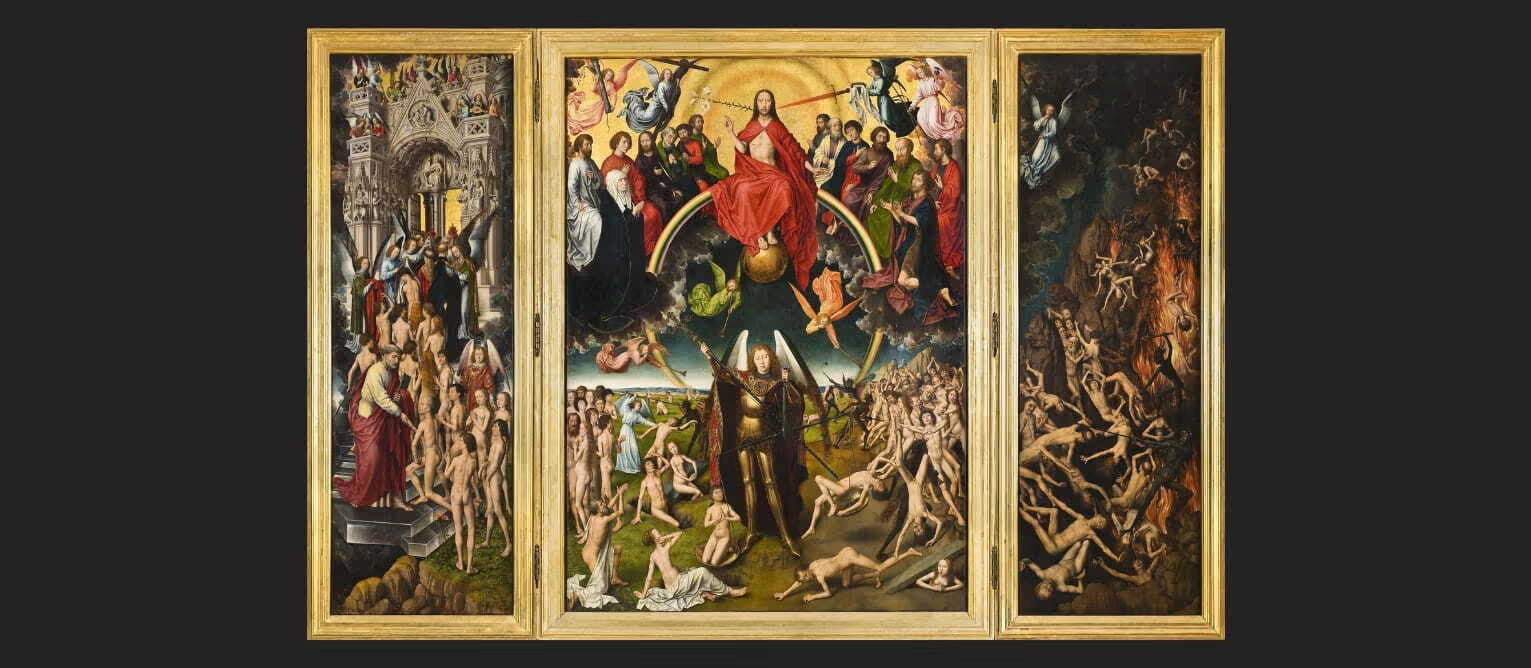
It is one of the most valuable works of Dutch painting in Poland, which can now be seen in the National Museum, which is located in the former Franciscan monastery. For lovers of sacred art, it is worth checking out other Museums in Gdańsk, which accumulate priceless collections related to the history of the city. The story of Memling's triptych could serve as the script for a sensational film, because the painting was war booty captured by the people of Gdańsk on a frigate sunk in the Gulf of Gdansk. Originally, the work was supposed to go to Florence, but fate wanted otherwise.
The Church of the Holy Trinity often escapes tourists rushing to more famous places. However, it really deserves your time and attention. It is one of the most important monuments of Gdańsk, which combines sacred functions with the rich scientific and cultural history of the city.
Oliwa Cathedral
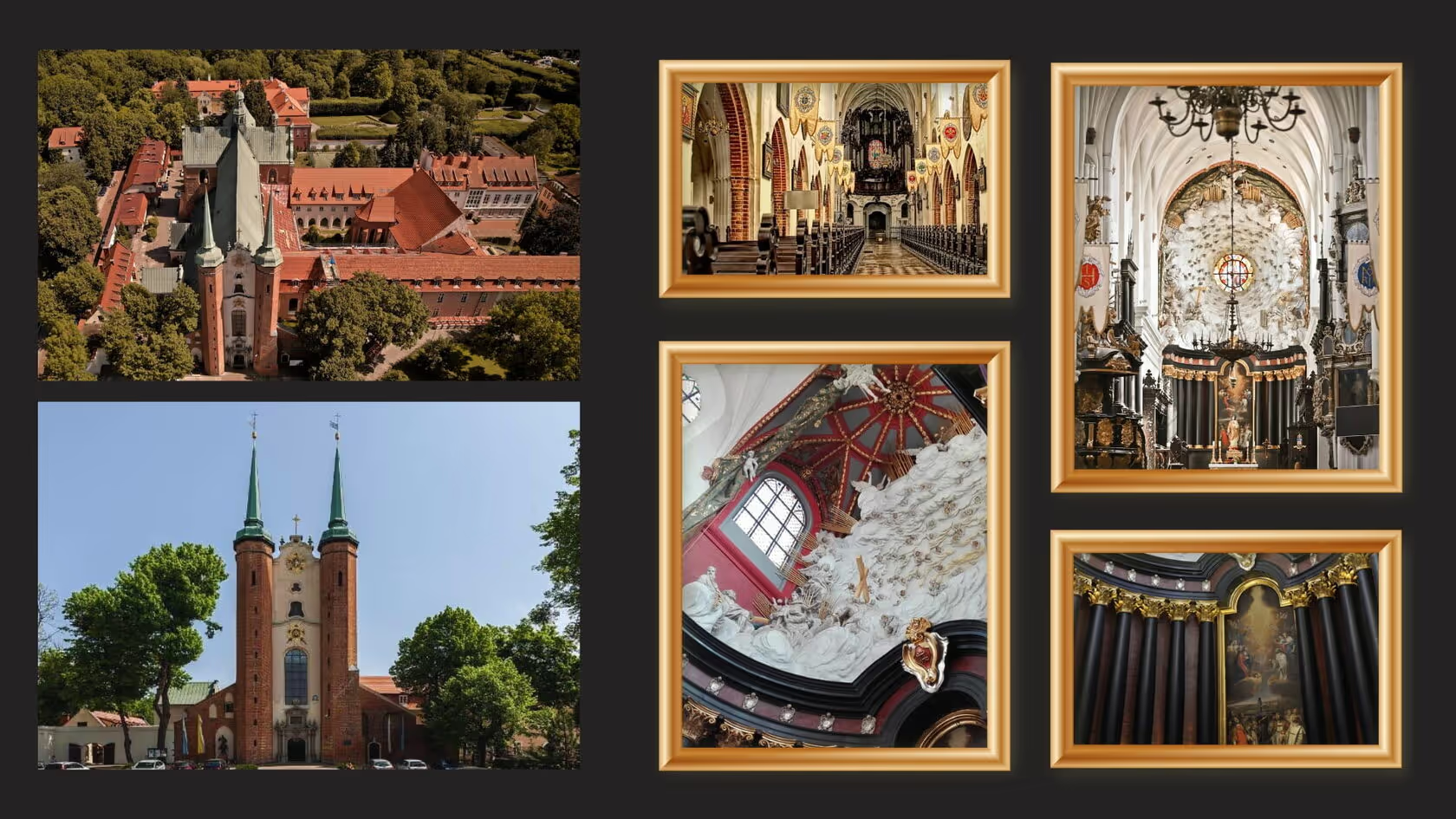
Although Oliwa is a bit far from the city center, you can go there for one reason: the Oliwa Cathedral is the longest medieval temple in Poland. Its 107 meters is an impressive size even by today's standards.The history of the cathedral dates back to 1186, when the Cistercians began the construction of the first church. The current shape dates from the second half of the 14th century. The interior is breathtaking — 23 altars (mainly Baroque and Rococo), 17th century paintings, chapels, tombstones.The biggest star is the Rococo organ decorated with 25 figurines of angels playing various instruments. They consist of 7876 pipes and are one of the most valuable pieces of organmaster craftsmanship in Europe. During concerts (they are held regularly, especially in the summer), the figurines move, creating an amazing audiovisual spectacle. Music spreads around the church, and the excellent acoustics remain in the memory for a long time.Oliwa was a monastery village of the Cistercian abbey for centuries, and it was annexed to Gdańsk only in 1926. A trip there can be considered as getting to know one of the key places for the whole Pomeranian region, apart from the strict history of Gdańsk in its urban sense.
More churches on the map of Gdańsk
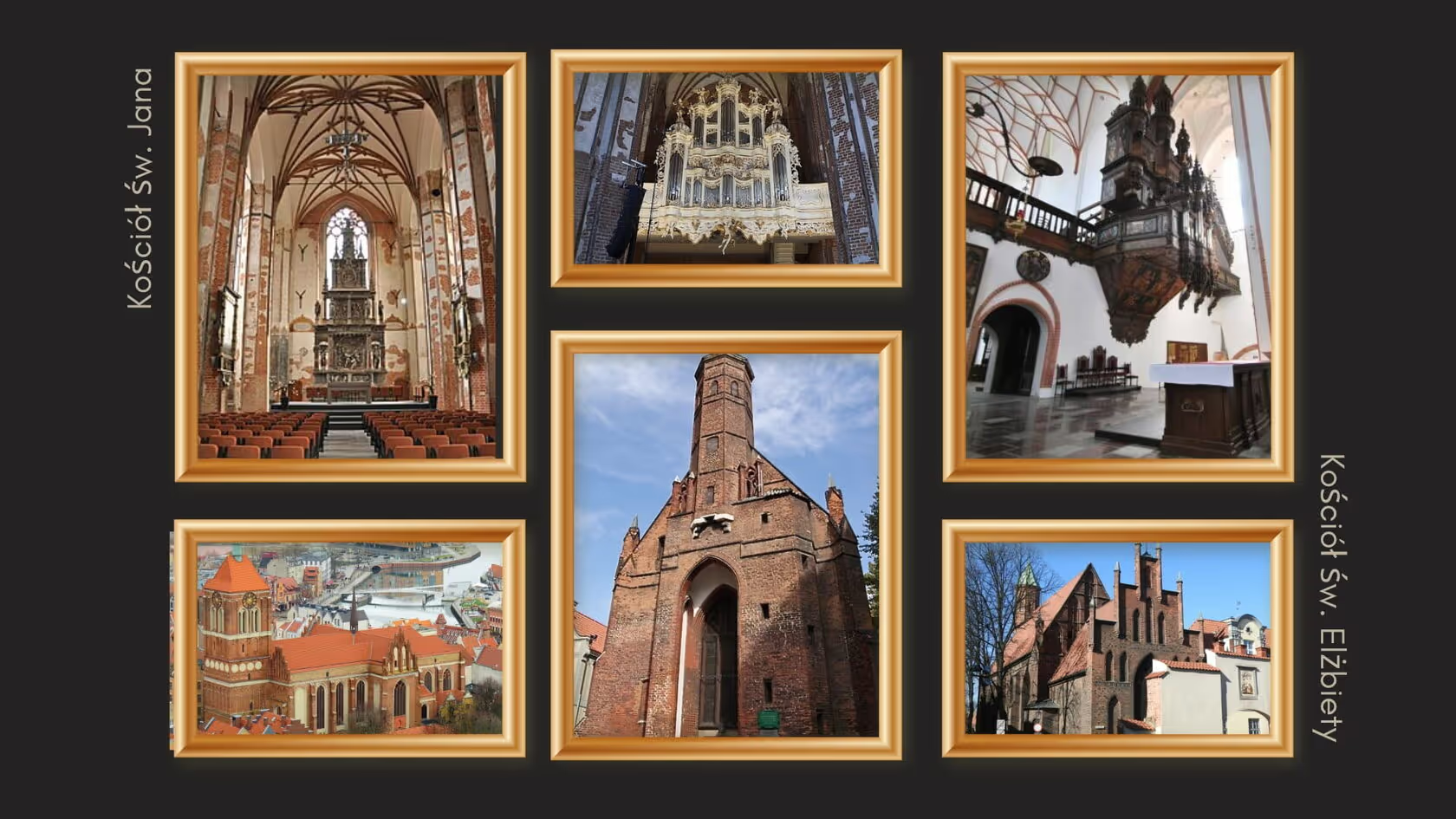
Gdansk has a few more churches worth visiting. St. John's Church (Johanniskirche) was built in the 14th century — construction began in 1360, and the tower was completed after the Thirteen Years' War, when the Teutonic Knights stopped blocking tall buildings in the vicinity of the castle. The Church of St. Elizabeth stands on Elżbietańska Street and remembers the times of the splendor of Gdańsk craftsmanship — local characteristics founded subsequent chapels and altars, signifying their position in the urban structure.Each of these churches carries its own history and plays a specific role in the urban fabric. By visiting them, you discover not only what Gdańsk is famous for in architectural terms, but above all you get to know the spirit of the city — multicultural, open, full of social and religious contrasts.
Walk through the Old Suburb in Gdańsk
Fortifications protected the city from the outside. However, life in Gdańsk also took place in districts that rarely hosted royal processions and grand celebrations. One such space is the Old Suburb. It is an area that has played a key role in the development of the city, although today many tourists forget about it.
{{ctablock}}
From shipyard to residential area
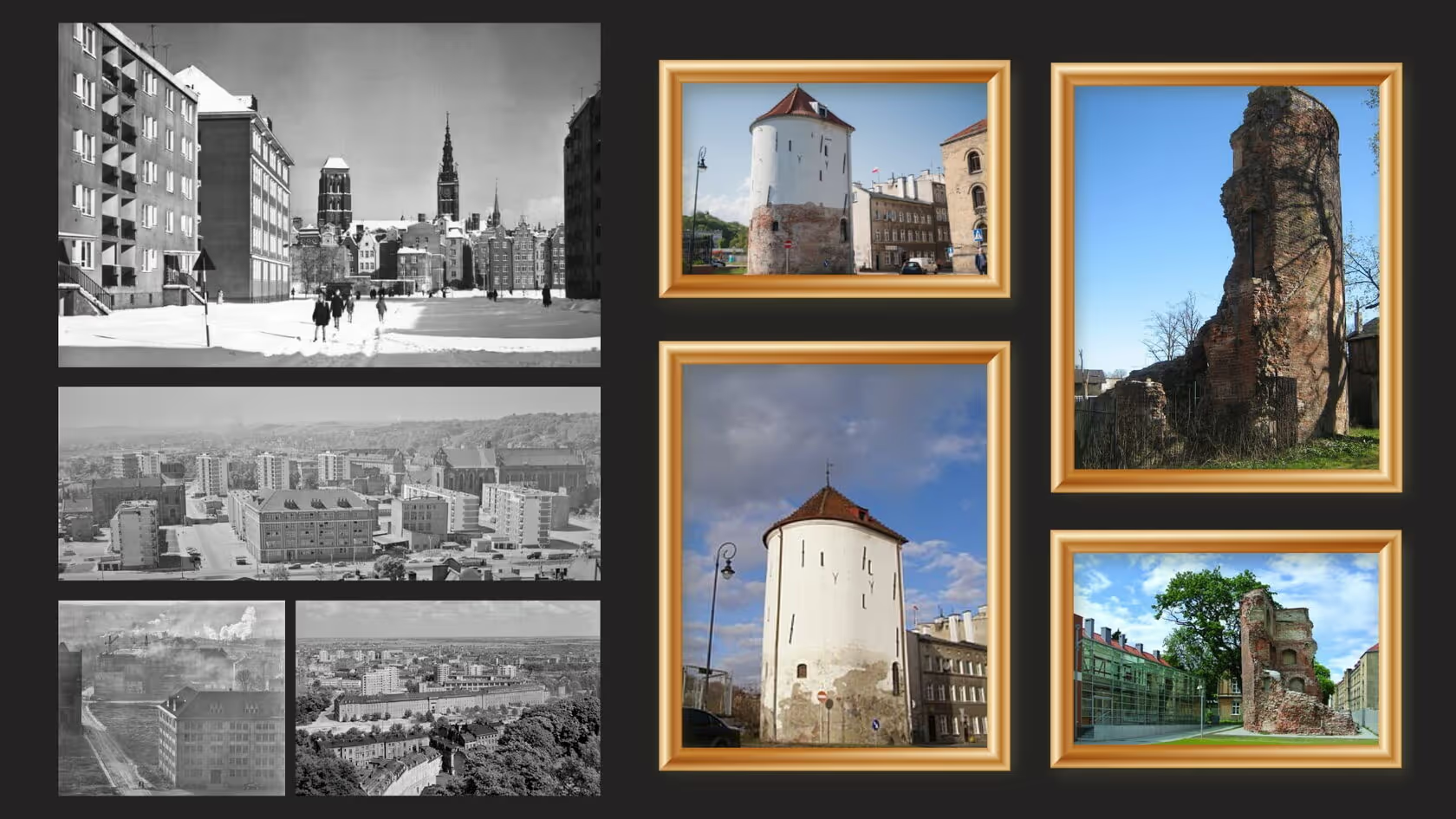
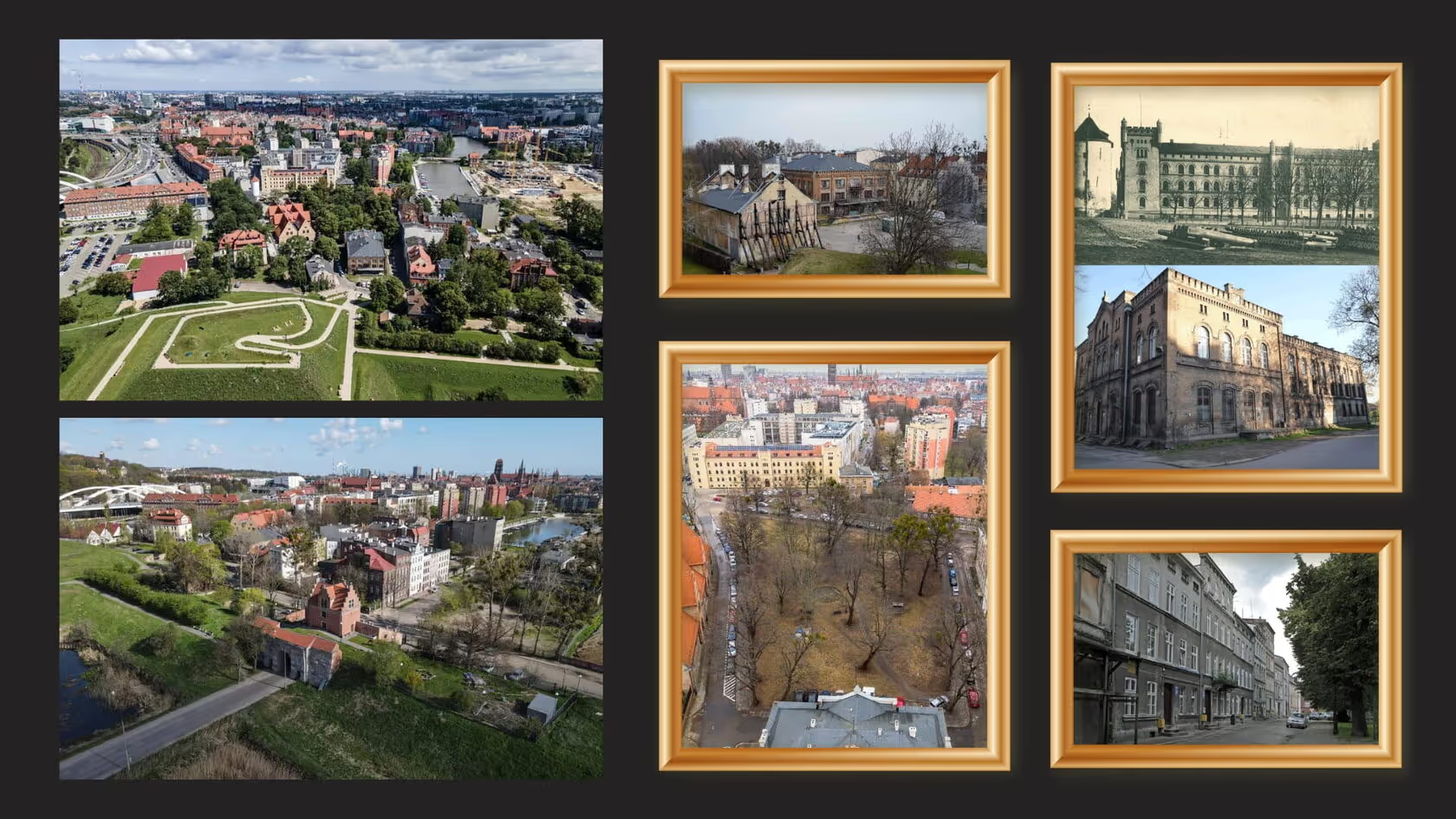
When we talk about the old town of Gdańsk, most people mean the Long Market and the Main Town. Meanwhile, right next door, behind Podwale Przedmieście Street, stretches the Old Przedmieście.The Old Przedmieście is a district with an equally rich, albeit less known history.It all started in the 14th century, when the Teutonic Knights granted this area to the Main City. The earliest development was Lastadia (from 1361) — a shipbuilding centre on the Motława River. Here ships were created by order of merchants from all over Europe: the Dutch, the English, the Flemish, even the Italians. One of the most interesting commissions was the construction of two caravels for the English king Henry VIII. For some time the district was called the New Town (1420-1454), but eventually the name Suburb (Vorstadt) was perpetuated. In 1430 there were already almost 400 estates inhabited by about 2,000 people (a good number by the standards of the time). In the years 1463-1490 a defensive system was erected - walls more than a kilometer long, two gates and at least seven towers. Two towers have survived from this medieval ring: the White Tower and the Baszta Pod Zstrobem. The first of them was built in 1461 as part of the New Gate complex, and later served as a powder warehouse. Today it houses the High Mountain Club, and during the renovation works interesting murals with secular themes were discovered inside.
Old Town Hall
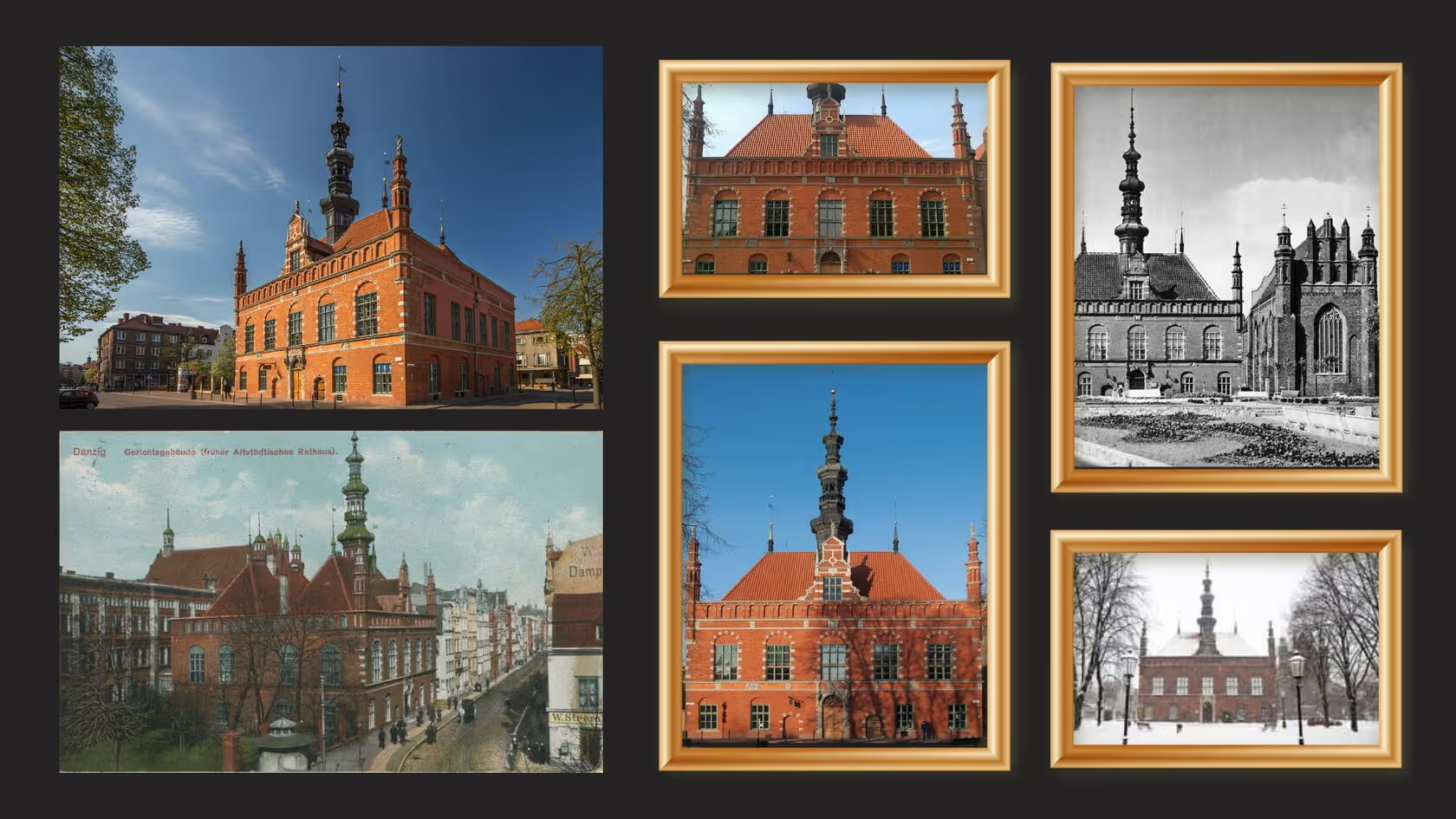
Between the Wielki Mlýn and the Church of St. Joseph stands one of the true jewels of Gdańsk architecture — the Old Town Hall. The first Gothic town hall was erected by the local townspeople as early as 1382, using a loan from the Count of Gdańsk. It was a half-timbered structure filled with brick. At the end of the 16th century, the building threatened to collapse. In 1587, the authorities of the Old Town received a loan from the Main City Council for the construction of a new town hall. The demolished Gothic building was replaced by a building in the style of Dutch Mannerism. The work lasted from 1587 to 1595, and the project is attributed to Antoni van Obberghen — the same architect who designed Fort Carré in Wisłoujście. The architecture of the town hall impresses with the contrast of the austere brick walls with the stone details. The facade is decorated with the coats of arms of Poland, Royal Prussia and Gdańsk, masquerades and a cartridge with the date of the beginning of construction. The attic with an arcade frieze testifies to the high class of workmanship. Two corner turrets and a representative main portal complete the picture.The interiors were originally quite modest - wooden beam ceilings, simple rooms. Only in the 17th century, the Great Council Chamber received richer equipment: carved tables and benches covered with red cloth, baroque furniture, portraits of Polish kings and well-deserved royals.In the years 1911-1914, a thorough reconstruction was carried out in the Neo-Renaissance style, saving many details from patrician tenements condemned to demolition. Thanks to this, the town hall became a kind of museum of Gdańsk stone and carpentry crafts.It is one of the few historic buildings in Gdańsk that suffered little during the war in 1945. That is why it is such a precious souvenir — it is not a reconstruction, but an authentic testimony of past eras.
Hidden courtyards and the vibe of the neighborhood
The Old Suburb has always been a district of craftsmen, shipbuilders and small merchants. Here there were workshops, breweries, mills. The urban fabric was dense, full of cramped courtyards and alleys.Wałowy Square deserves special attention. It is one of the few building complexes that survived the war almost intact. The townhouses of the mid-19th century have retained their original character. Walking through the streets: Rzeźnicka, Żabi Kruk, Kłodki or Kocurki, you will discover fragments of the former Gdańsk — each of them hides a history written in architecture. After the war, the district was rebuilt differently than the Main or Old Town. Instead of reconstructing historical buildings, they opted for modern architecture, which was supposed to contrast with the monuments, but at the same time was adapted to the medieval grid of streets. A kind of collage of styles was created - from Gothic to Modernism.
{{ctablock}}
Unfortunately, the busy W-Z (Podwale Przedmieskie) route cut the district off from the rest of Śródmieście for many decades, which contributed to its degradation. The Old Suburb was and often still is confused with the Lower Town — a district with a completely different history. This mistake shows how much this part of Gdańsk has escaped wider awareness.However, the potential is enormous. Ongoing revitalization, restoration of bastions, modernization of public space — all this makes the Old Przedmieście slowly regain its place on the tourist map of the city. After an intense sightseeing, you can relax in one of the intimate cafes or go for a walk along the Motława River.
Restaurant in the center of Gdańsk after visiting the sights
After a few hours of walking between the sights, the legs demand rest, and the stomach begins to remind of itself. Restaurant in Sródmieście Gdańsk Stępkarska Street 7 is located only a few hundred meters from the key points of historical Gdańsk. The Museum of the Second World War is 500 metres away and the Wałowa Street with its bastions is less than 400 metres away.The location on the Motława River, in the modern district of the Main Town, means that it can be reached both on foot from the centre and by water tram. The F5 stop is just 29 metres from the restaurant. After a day of exploring the churches and historic districts, the Secret Room offers a space where you can really relax. If you are looking for a place to summarize a day full of Gdańsk discoveries, between the Old Przedmieście and Granary Island, the Secret Room is where the tourist trail ends and the time for recovery begins.

Gdansk off the beaten track
Sightseeing in Gdańsk is not only a walk along the Royal Route or the entrance to the tower of St. Mary's Basilica. Authentic discoveries await in quieter corners. In the church of St. Catherine with the oldest foundations in the city, between bastions covered with grass, in the courtyards of the Old Przedmieście. What is Gdańsk famous for? From a rich history, from multiculturalism, from a mixture of architectural styles. But most of all from the people who for centuries built this city, defended it, rebuilt it after the destruction. Each monument is a fragment of this collective memory.When planning a visit, check well What to see in Gdansk Except for the most obvious attractions. You don't get to know the city in a hurry, running from one must-see to another. The essence of Gdańsk manifests itself at a calm pace when we allow ourselves to stop for a moment.
An Exceptional Evening in Gdańsk!
Reserve a table at Secret Room!