Unique birthday ideas worth trying

How to plan a birthday so the night survives the cake?
An evening stands on the format you pick for the group, so birthday ideas here run from the quietest version to the loudest, with an hour-by-hour timeline and a prep list.
We put these evenings together with organizers, so some of the answers below get very specific. Birthday restaurant in Gdańsk shows each space in photos, along with its capacity and booking rules, and the planning is what we handle below.
Before you pick an activity, answer three questions
Three variables set the whole evening, and the rest is execution. Guest count, the energy of the person celebrating, and someone responsible for how the night runs. Answers to these will cross off most suggestions on any list online before you book anything.
1. Someone gets sick, someone gets sent on a work trip, someone confirms and simply doesn't show, so the invite list always runs longer than the guest list. Book for the number confirmed a few days out, because an empty seat shows up in photos more clearly than a chair pulled over from another table. A group that grows at the last minute is the easier problem, since sliding a table over takes a minute and rebuilding the room around a five-person gap takes longer.
2. The second question is about the guest of honor and the shape they're in that day. Some want a dance floor and loud music; others would sit in one place for four hours and talk. A go-kart tournament for someone coming off three weeks of overtime is a gift for the organizer, and a long dinner for someone who has been waiting a week to dance ends in quiet disappointment on both sides.
The simplest way to check is to ask directly, even if the party is meant to be a surprise. A few weeks out, ask how they picture a good Friday night, and write the answer down before your own concept takes over. A question asked far from the birthday date gives nothing away.
3. The third question is the one people skip, and it costs the most. Someone has to know when the cake comes out, who gives the first toast, and when the music changes. If that someone is the guest of honor, the birthday turns into a shift at work, and the photos from that night show a person who spent four hours circling between tables.
Pick one person from the guest list or hand part of the job to the venue. Settle the split at the booking stage, because mid-evening nobody has the head for deciding who runs out for candles.
Guest count decides everything that follows
Guest count changes the layout, the way food comes out, the volume, and even when the toast happens. The three tiers below call for three separate decisions.
Small, up to six people
A dinner where everyone eats off one table and tries each other's plates covers the whole program on its own. Conversation doesn't split into groups, so any activity forced on top eats time that was already working.
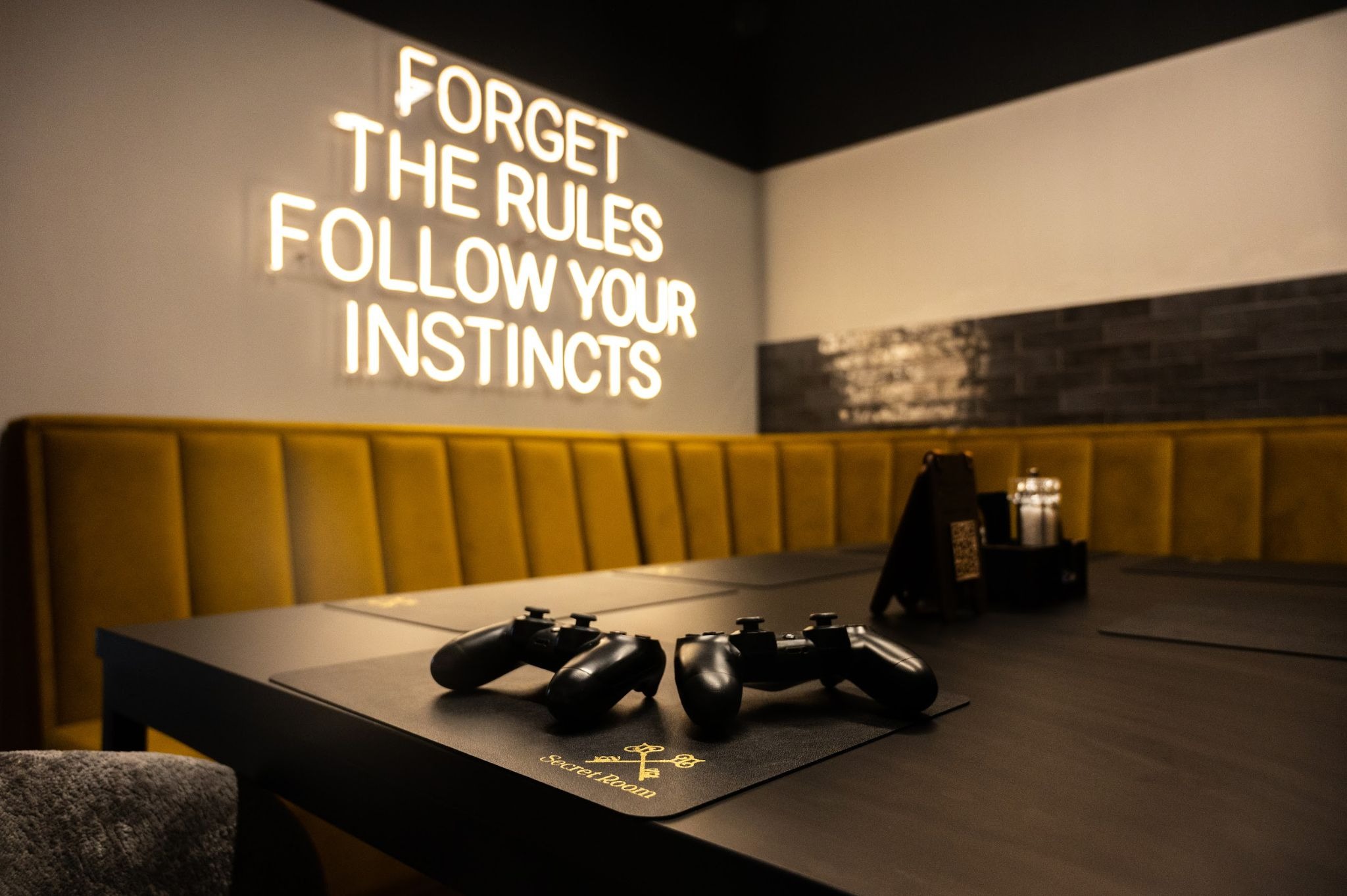
🗝 A closed room beats the main hall here, since our VIP rooms take six to eight people and come with a PS5, a big screen, and a shelf of board games. You can use them or leave them alone, and that usually settles itself in the second hour, once it's clear which way the night is going. Bachelorette and bachelor parties book the same space for the same reason.
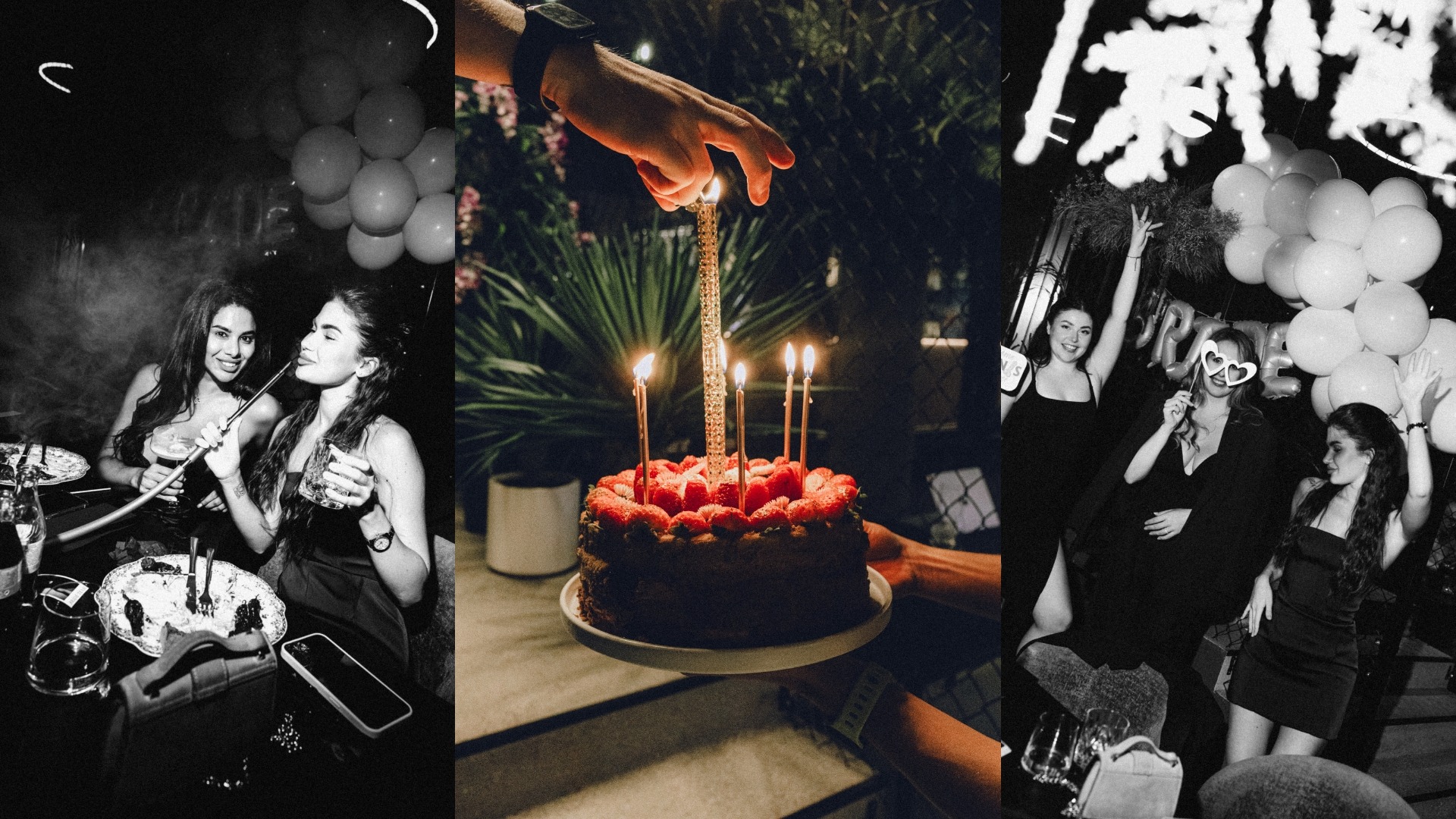
Eight to sixteen
Above eight people, the conversation breaks into two or three independent tables, and with no shared moment, the evening drifts into several parallel meetings. The organizer's job becomes pulling everyone back together once an hour, even for five minutes.
🗝 A quiz about the guest of honor does that job, so does a shared tasting or one beat where everyone looks in the same direction. For private events, we set the menu separately with the organizer, so the order in which courses come out can be mapped onto that rhythm and used as a natural break in place of inventing separate games.
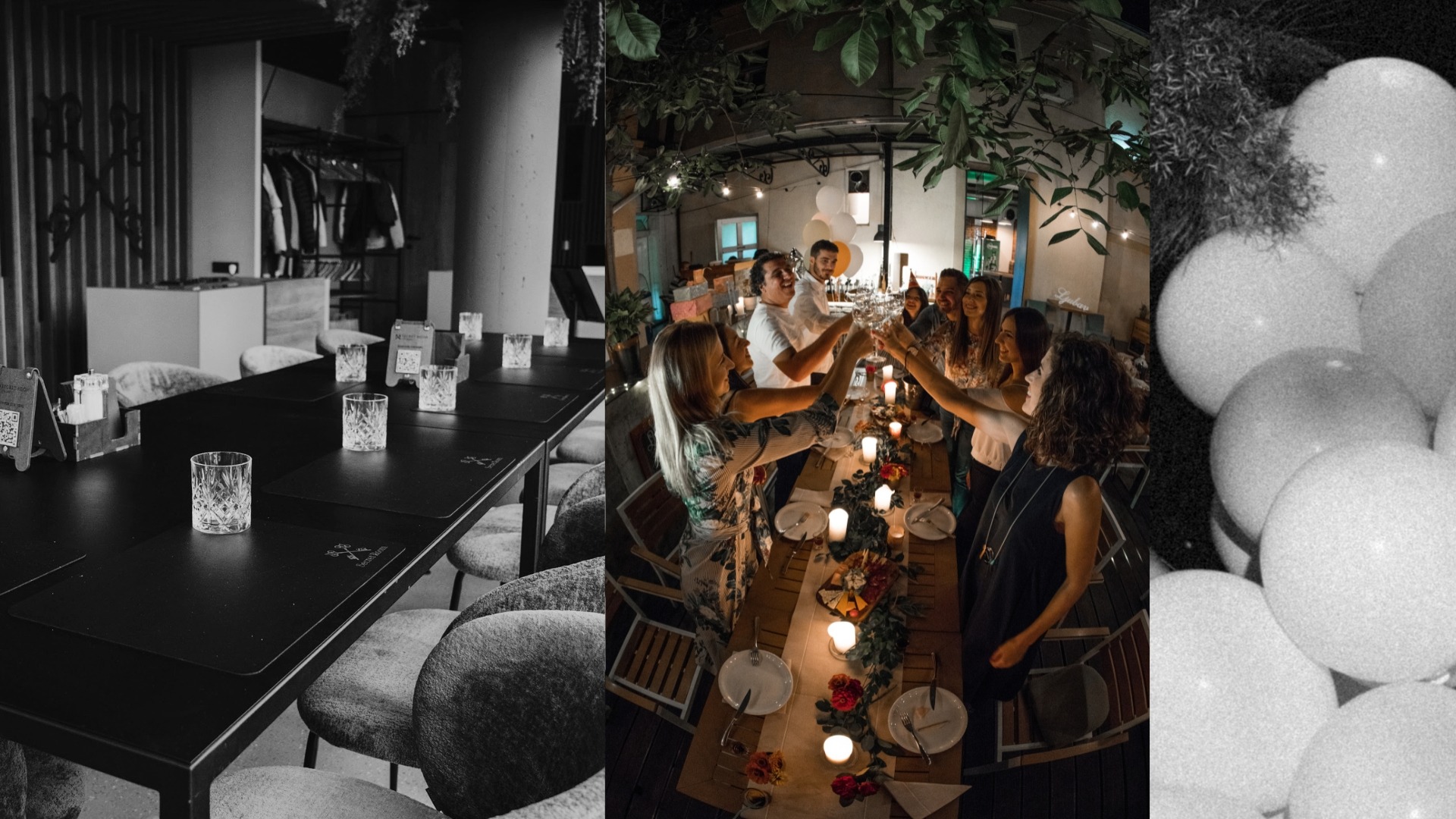
Twenty and up
For groups from twenty to around eighty, renting the space exclusively starts to make sense. Neighboring tables, volume, and the question of standing up to speak into a microphone all disappear, and your guests stop sharing the room with people who came in for a quiet dinner.
🗝 At that scale, we add stage production, meaning a DJ or a live band chosen at booking, plus a photographer or video operator working the full evening. We set the scope with the organizer ahead of the date, since the room layout and the spot where the cake table goes both depend on it.

6 evening scenarios, from quietest to loudest
Each format below answers the question of what to do on your birthday when a table with food alone falls short and renting a banquet hall goes too far. They differ in pace, prep cost, and how much attention they pull onto the guest of honor, and they run from an evening with no plan at all to one with its own stage.
1. Four hours with no plan in the lounge
Some people celebrating want no program whatsoever, only to sit, smoke shisha, drink slowly, and talk until midnight. The lounge zone with hookah covers exactly that.
A separate option is the Chinese tea ceremony, which takes time by design and gives the table a shape. It works as a midpoint for a group where part of the room isn't drinking.
2. The menu as the program
In place of ordering separately, you build a sequence. A few starters for the middle of the table, one main per person, dessert coming out at the end with the candle. The format works best with a small group reaching into shared platters, where conversation tracks whatever lands in front of them.
Tell your guests you're ordering together. Otherwise half the table will have picked their own dish before the server gets to the end.
3. A birthday split across two days
One day for yourself, one for everyone else. A solution for people who like celebrating but can't stand being the center of attention for twelve hours straight. After a quiet afternoon, the guest of honor arrives rested in place of worn out by a morning spent answering calls.
With that split, dinner with the group lands better the day after the birthday itself, once the wave of calls and messages has passed.
4. A theme and a cocktail built around the guest of honor
A theme works when it's simple to execute. One color in the dress code, one decade, one film. The longer the instruction in the invite, the more people show up in whatever they wore to work.
Our bar builds cocktails around a specific flavor intent, so a drink matched to the guest of honor's taste becomes its own moment in the evening, one you can't recreate at home. Ask the bartender for a recommendation based on what they like in place of reading the full menu at the table.
5. A tournament in place of forced conversation
A game gives structure that conversation alone won't. A console on the big screen, a board game for four, or a quiz about the guest of honor built from questions collected beforehand.
Even a token prize is enough to give the evening a beginning, a middle, and a result. Just settle who runs it and how long one round lasts, since a tournament with no time frame swallows the whole night and pushes out everyone who didn't want to play.
6. A stage that takes hosting off your hands
When the evening has its own program, nobody in your group has to run it. Breaks between sets fall naturally on toasts and cake, and guests who don't know each other get a shared subject from minute one.
The variant calls for checking the events calendar before you lock the date, since we publish concert and stand-up nights in advance. Book the whole group at once so you don't end up spread across three rows.
What to do at the table once the cake is gone?
The biggest gap in most parties opens right after the toast. Small birthday activities usually close it, none of which require leaving the venue or hauling equipment.
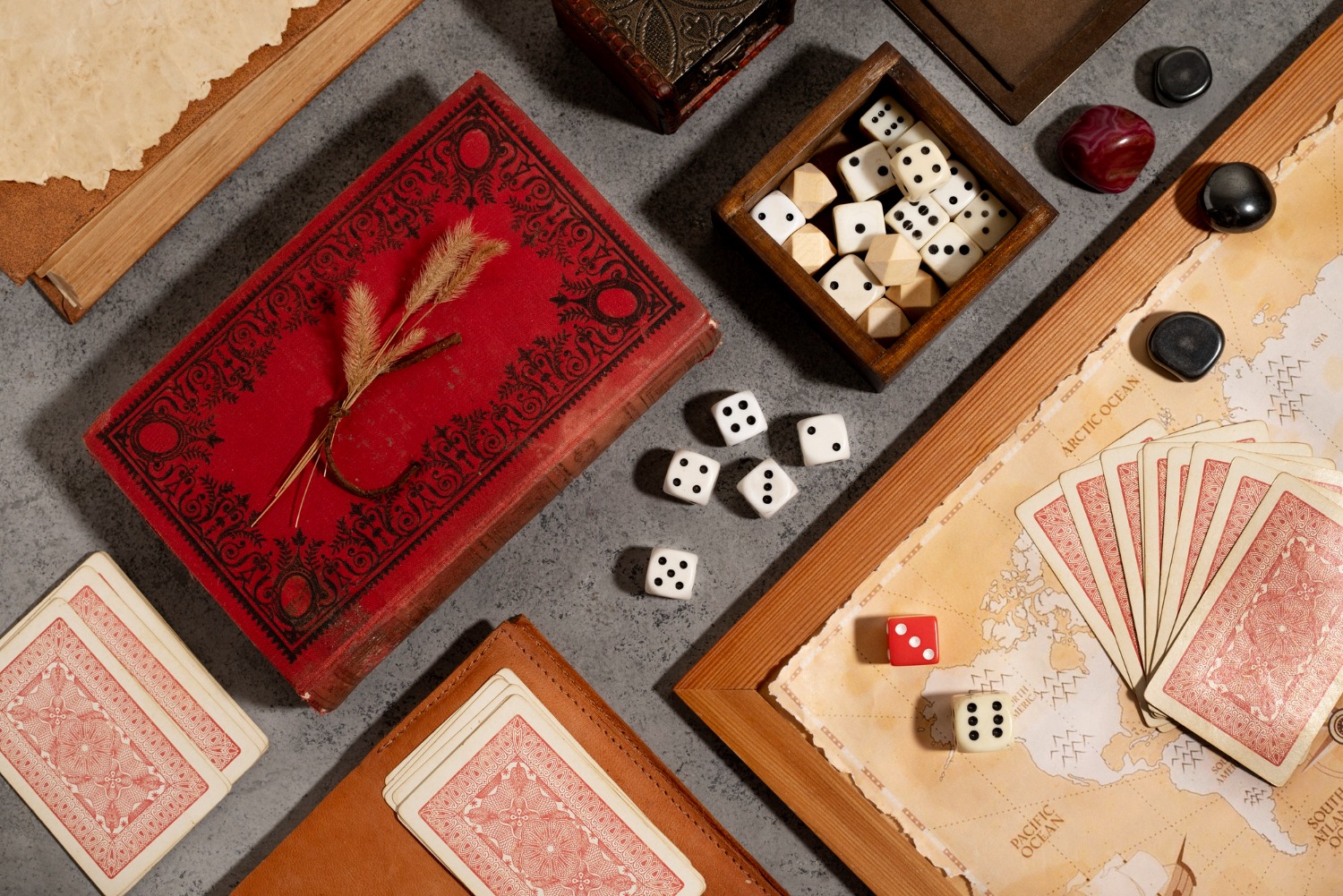
Pick two, three at most. The rest stay in reserve in case the evening runs slower than you planned.
- Group playlist. A link sent the day before; everyone adds one track. The night gets a soundtrack built by the people in the room.
- Envelope of questions. Each guest writes one question for the guest of honor. You draw them one at a time across the evening.
- Blind tasting. Three cocktails served with no names; guests guess the ingredients. Works with desserts too.
- Video messages recorded on site. One person with a phone works the tables. The footage reaches the guest of honor the next day.
- Memory ranking. Everyone tells one story with the guest of honor in the lead role; the rest score it from one to ten.
- Roast. Three people, two minutes each, only material cleared with the guest of honor beforehand.
- The question chair. The guest of honor sits down, guests ask anything, and they can refuse to answer three times.
- Time capsule. Notes from guests sealed in an envelope with a date to open it a year out.
Items one, six, and eight need prep the day before; the rest start cold. With the roast, clearing the material with the guest of honor is the condition, since an improvised joke can land nothing as its author intended.
How to spend your birthday without a party?
Not everyone is after a party. We get asked regularly how to spend your birthday in a small group or entirely alone, and those evenings run on different logic than a booking for forty.
A day just for yourself
It starts with clearing social obligations and leaving one point for the evening. The rest of the day needs no plan, since an empty calendar is half the gift here.
Dinner alone at the bar sounds strange until you try it. The bartender is company that doesn't need conversation kept alive, and a bar seat makes ordering two small plates feel natural in place of committing to a full sequence of courses. Walking in right at opening gives you the quietest room of the day.
Dinner for two
A longer menu earns its place here, since nobody is waiting their turn and nothing forces a pace. Order in sequence, from starters through to dessert with the candle, and give yourselves at least three hours for it.
Ask for a table away from the entrance so foot traffic at the door doesn't break the evening every few minutes. For couples who want more than dinner alone, the Chinese tea ceremony gives you a shared occupation for the middle of the night.
A family gathering with no script
With four to six people, the conversation runs on one track, so order together and skip the program. A seat away from the speaker solves most of the acoustic trouble, particularly with three generations at one table.
What the three share is the absence of obligation toward guests. Nobody needs entertaining, so for the first time that day the person celebrating isn't responsible for how anyone else feels.
A door that closes, an open room, and the whole place to yourselves in Secret Room
What usually decides the space is how much of the outside world you want left in your evening.
A VIP room closes behind a door, and from that point the group sets its own volume, its own pace and its own moment for the cake. Nobody looks in, service comes when called, and the conversation competes with no table next to you.
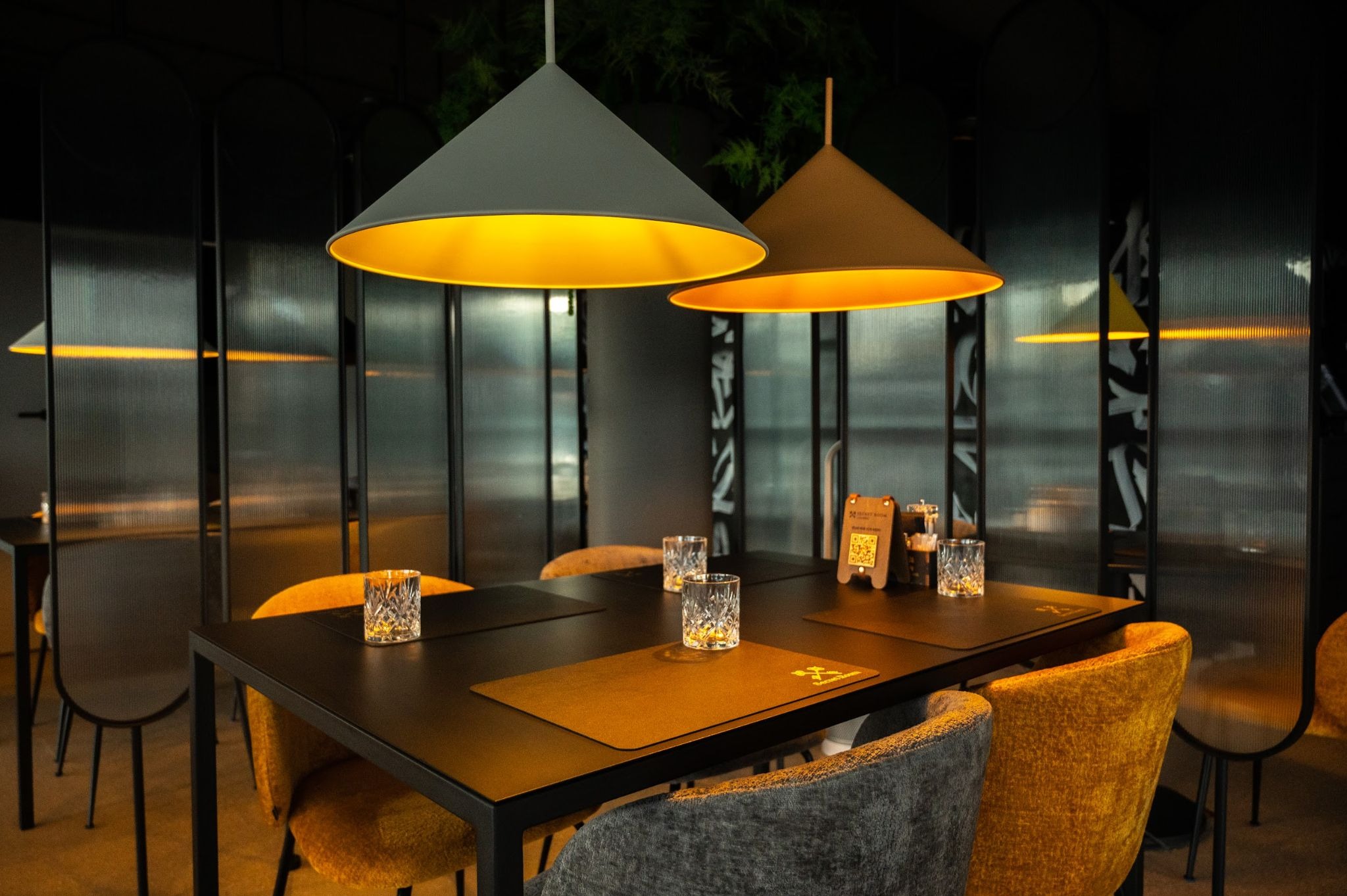
A table in the main room works the opposite way. The evening moves with the rhythm of the whole venue, under dimmed light and music set low enough to talk without raising your voice. Groups who want the feeling of being out on the town usually go this route.
Renting the space exclusively removes both dependencies. The venue then runs for one event, you set the schedule yourselves, and the stage and sound system stay available for the length of the party.
Ask when you send the inquiry if two spaces can be combined in one evening on your date. A group that starts at the table and ends in the lounge changes pace without ending the party, which saves evenings running past four hours.
The regular guest card brings the bill down. Secret Community gives a one-time 20% off the full menu in a ten-day window around the birthday date, on the condition that the card is registered before you book and the code URODZINY20 goes into the comment.
What to tell us in advance so you're not running the evening from your phone?
How the work is divided decides the fate of birthday party ideas more than the choice of activity. A handful of details passed on before the date is enough for the organizer to sit down at the table with everyone else.
- Arrival time and final head count. Both drive the space and the table layout.
- Allergies and intolerances. The kitchen needs them early so service doesn't stall mid-evening.
- Cake. Who brings it and where it waits until serving.
- Surprise. Does the guest of honor know who walks in first, and at what point they appear.
- Gifts. With a bigger group, a separate spot for packages helps, so they don't take up half the table.
- Payment. Who closes the bill at the end.
The organizer keeps the guest list, the gifts, and the format call. We run the rest.
An Exceptional Evening in Gdańsk!
Reserve a table at Secret Room!