
What is Aperol? History, Taste, and Serving Guide
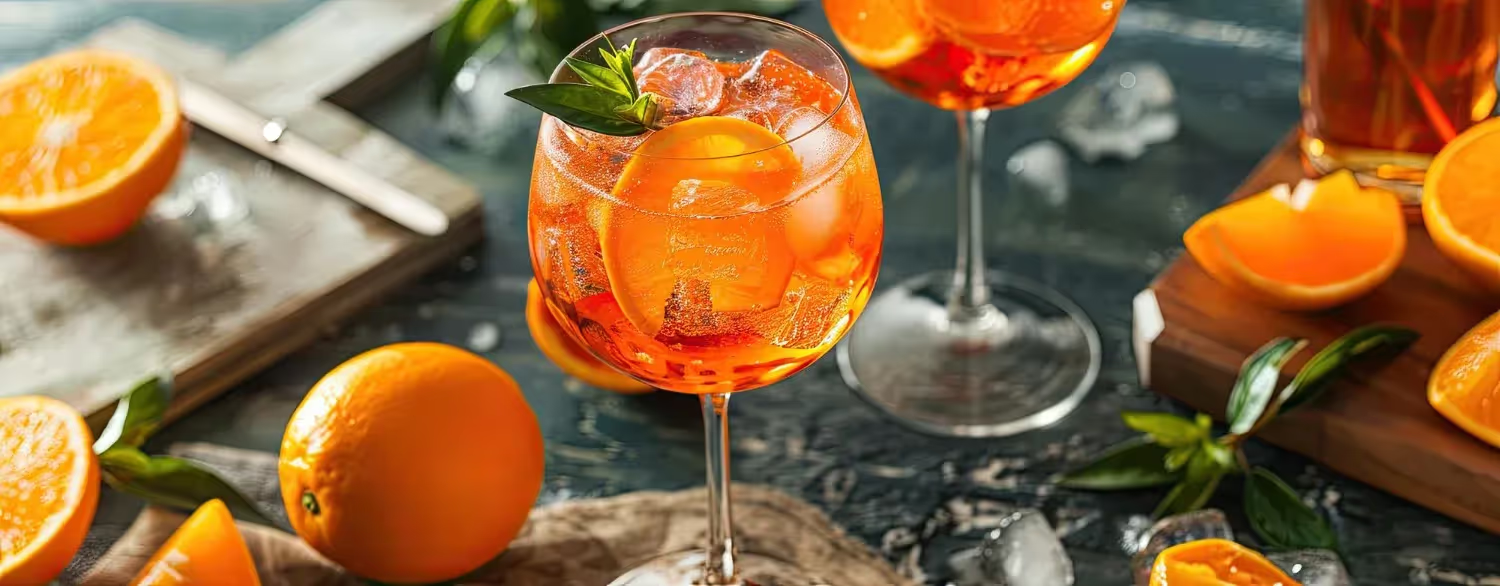
Aperol was created in 1919 from the Barbieri brothers' vision to craft a light, 11% ABV aperitif with a bitter-sweet orange flavor. Today, we most commonly enjoy it as Aperol Spritz with prosecco and soda water.
The orange liqueur in tall glasses has become the symbol of summer evenings on terraces. This Italian spirit has become a symbol of summer relaxation and social gatherings in recent years, winning the hearts of cocktail lovers worldwide who enjoy Aperol Spritz drinks and other prosecco cocktails.
How it all began in Padua
1919. Brothers Luigi and Silvio Barbieri finish seven years of experimentation in their Padua distillery. They weren't looking for alcohol for evening drinking sessions, but something entirely different – a drink that would open the appetite before family dinner.
Their vision was revolutionary for those times. Most alcohols had high proof and heavy character. The Barbieri brothers dreamed of something light, refreshing, colorful. The first presentation at the Padua trade fairs went almost unnoticed.
True success came after the war. Changing Italy, new habits, tourism development – everything favored the aperitivo culture. This wasn't coincidental. Society needed moments of respite, space for conversations, and slow preparation for evening meals.
What does aperitif mean? The Italian tradition of gatherings
Before exploring Aperol's secrets, understanding the context of its birth proves helpful. What does aperitif actually mean? The word comes from Latin "aperire," meaning "to open," – referring to opening the appetite before the main meal.
An aperitif in practice represents much more than an alcoholic beverage. In Italian culture, aperitivo creates a true social ritual – time spent with friends and family, usually between 6:00 and 8:00 PM, when light snacks and refreshing drinks are prepared for evening dinner.
From a gastronomic perspective, an aperitif should stimulate taste buds, not satisfy hunger. Most aperitifs feature a dry or slightly bitter taste, unlike sweet dessert liqueurs.
This tradition has crossed Italy's borders, and places like Secret Room in Gdansk bring Italian aperitivo culture to Polish soil. They adapt the philosophy to local climate and life rhythm rather than copying Italian patterns. Here, aperitif gains new meaning: space for business conversations, romantic meetings, and celebrating friendship.
{{ctablock}}
Century-old recipe secrets
Aperol's composition remains one of the best-kept secrets in the alcohol industry. Despite being over 100 years old, the exact formula of this orange liqueur remains known only to a few people at the Campari Group.
What do we know for certain? The composition builds on extracts from several dozen herbs and botanicals, dominated by:
- Bitter orange peels – provide characteristic color and citrus aroma
- Rhubarb – a source of delicate bitterness
- Gentian – a mountain plant adding complexity to taste
- Cinchona – subtle bitter notes
- Mediterranean herbs – a mysterious blend adding depth
Orange liqueur also contains water, ethyl alcohol, and sugar, which harmoniously bind all ingredients together.
This caution in revealing details happens for good reason. Aperol competes with dozens of similar products. Its uniqueness lies precisely in the unrepeatable harmony of ingredients, which no one has managed to copy for over a century.
Bittersweet symphony of flavors
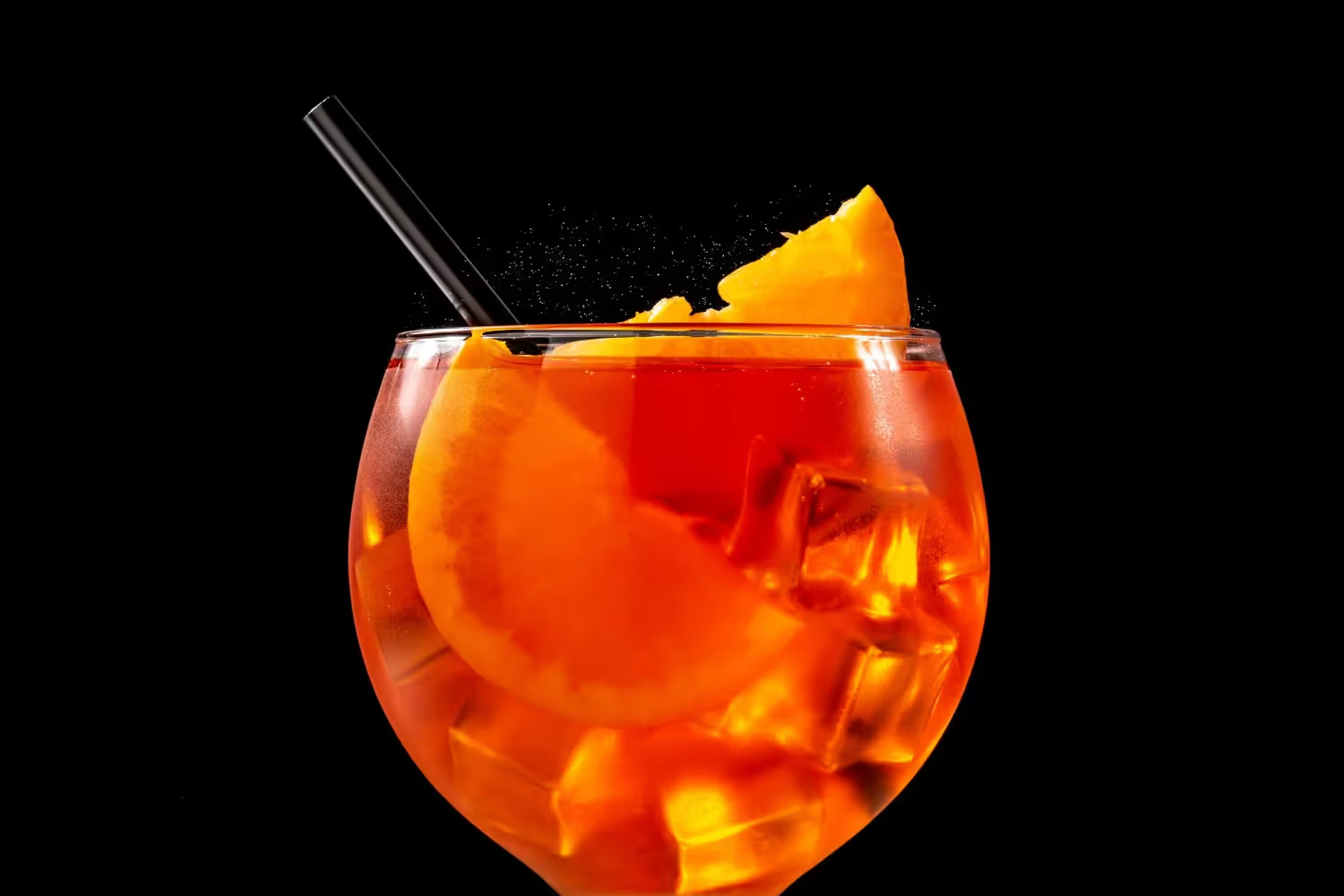
The first sip of Aperol creates a journey through several flavor layers. Sweet notes of fresh orange fill the palate initially. After a moment, bitterness appears, but not aggressive like in Campari – rather delicate, reminiscent of pink grapefruit peel.
Herbal accents hide in the background - Mediterranean, slightly spicy, with notes of anise and cloves. Everything combines into a harmonious composition where no element dominates others.
This complexity, at an 11% alcohol content, demonstrates true artistry. Creating intense flavor using high-proof alcohol comes easily. Achieving richness of aromas at such low strength proves much harder.
What to mix with Aperol
Though you can drink it solo on ice, Aperol's true potential reveals itself with other ingredients. Classic prosecco perfectly balances its bitter-sweet character, while soda water adds refreshment to any Aperol Spritz drink.
Citrus juices - orange, grapefruit, lemon - emphasize the natural flavor profile. Tonic introduces additional bitterness for dry drink lovers. Some experiment with fruit syrups or stronger alcohols when crafting hot Aperol variations for colder months.
Best combinations with this orange liqueur:
With sparkling wines:
- Prosecco – classic pairing in Aperol Spritz
- Cava – Spanish alternative
- Champagne – for an elegant version
With citrus juices:
- Orange juice – emphasizes citrus character
- Grapefruit juice – adds freshness
- Lemon juice – in fizz-type cocktails
With carbonated waters:
- Tonic – for dry taste lovers
- Soda water – classic Spritz addition
- Flavored sparkling waters – citrus, peach
{{ctablock}}
From classic Spritz to contemporary creations
Aperol Spritz remains the most popular drink with this liqueur. The classic Aperol Spritz ingredients follow a 3:2:1 ratio (Prosecco:Aperol: soda water), which was approved by the International Bartenders Association as the official standard.
This Spritz phenomenon conquered the globe through an interesting history. The cocktail's origins reach back to the 19th century, when Austrian soldiers stationed in the Veneto region diluted local wines with water, creating a drink called "Spritz" (from German "spritzen" – to spray).
The Aperol Spritz, in its contemporary form, evolved from that simple idea. The drink gained new life when Aperol was added to the traditional wine and water mixture, creating a Prosecco cocktail with a unique taste and character.
The cocktail scene continues evolving. Aperol Fizz adds fresh lemon juice and simple syrup. Paper Plane combines it with bourbon and Amaro Nonino. Aperol Hugo introduces elderflower and mint for a refreshing twist.
Each drink shows a different face of Aperol. In Spritz, it appears light and vacation-like. In Paper Plane - elegant and complex. In creations with vodka or whiskey - more characterful and masculine.
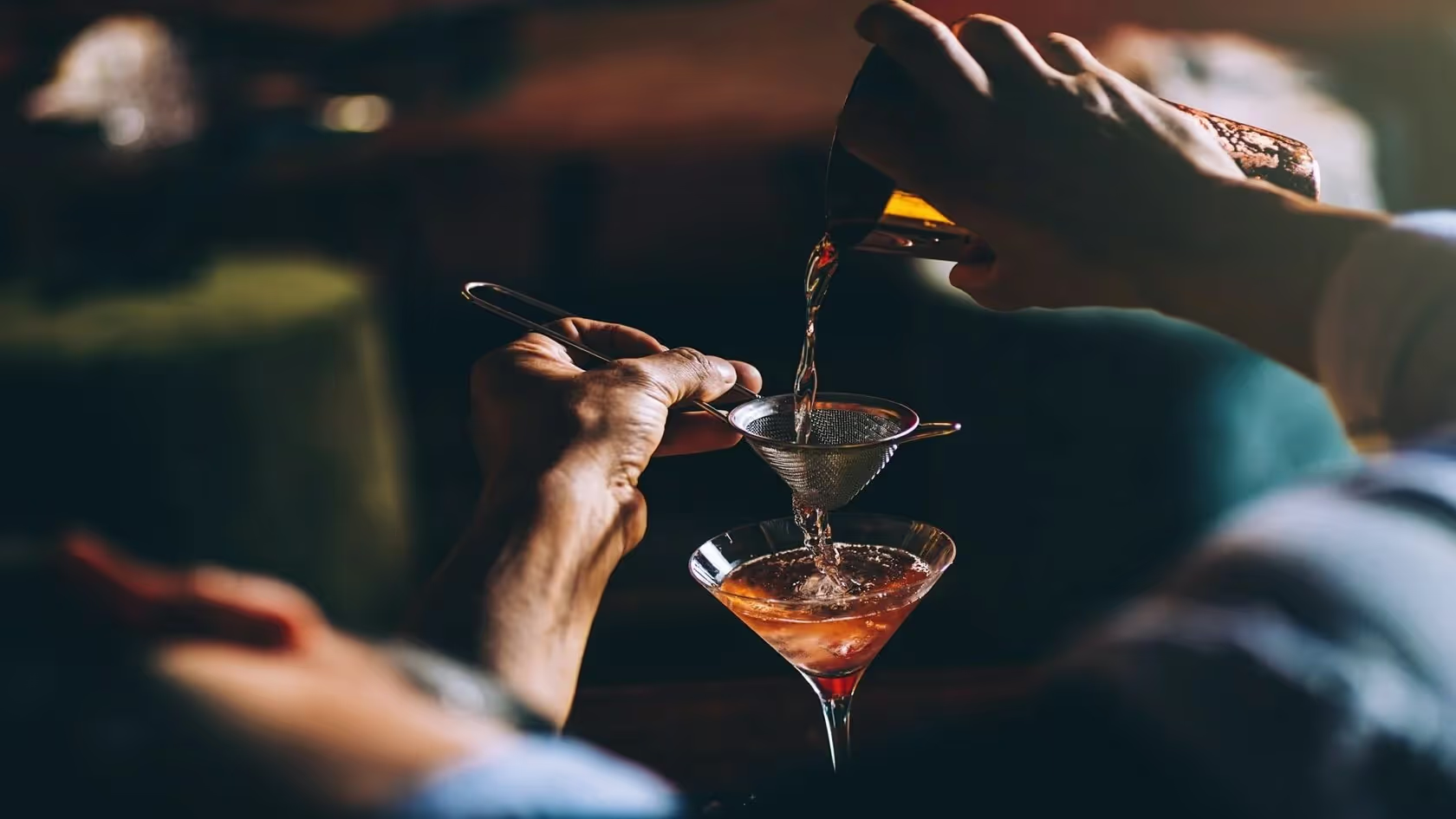
Aperol cocktails, from the Aperol-Prosecco duo to vodka versions
Aperol cocktails usually run on the same contrast, a bitter-sweet liqueur plus something that lightens it up. The shortest route is the Aperol-Prosecco duo, the Spritz, where the wine's bubbles brighten that orange bitterness. The Spritz sits in the family of cocktails with Prosecco, and those land among the most-ordered drinks come summer.
Aperol also gets along with stronger bases. An Aperol and vodka cocktail comes out drier and more assertive than the Spritz, because vodka adds no flavor of its own and only pushes up the strength and sharpens the bitter notes. Rum or bourbon pull it into dessert territory, and each base sets Aperol in a different key.
Italian spirits and dolce vita tradition
Italian spirits serve as much more than beverages – they act as cultural carriers that transport the essence of the Italian lifestyle. Aperol occupies a special place in this family, representing the light, social side of Italian drinking culture.
Italian spirits traditionally divide into categories:
- Aperitivi (Aperol, Campari, Punt e Mes) – before meals
- Digestivi (grappa, amaro, limoncello) – after meals
- Wines (Prosecco, Chianti, Barolo) – during meals
The focus centers on celebrating the moment, building relationships, and enjoying company rather than intoxication. This "dolce vita" philosophy – sweet life, that prioritizes pleasure over haste.
This differs from French aperitif culture or Spanish tapas tradition. It carries its own, unrepeatable character – warm, familial, open to others.
Aperol at Secret Room
Secret Room in Gdańsk keeps a restaurant, a lounge, and a bar under one roof, and each part has its own chef and its own menu. We build our drinks from scratch, with house infusions and classics arranged our own way, so Aperol shows up here only for a season, never as a permanent fixture.
We swap the feature drink from month to month through the season. August goes to Aperol, and our staff will point you to that week's version. In the spirit of aperitivo we described above, what counts most is the time spent at the table, and the glass is only part of it.
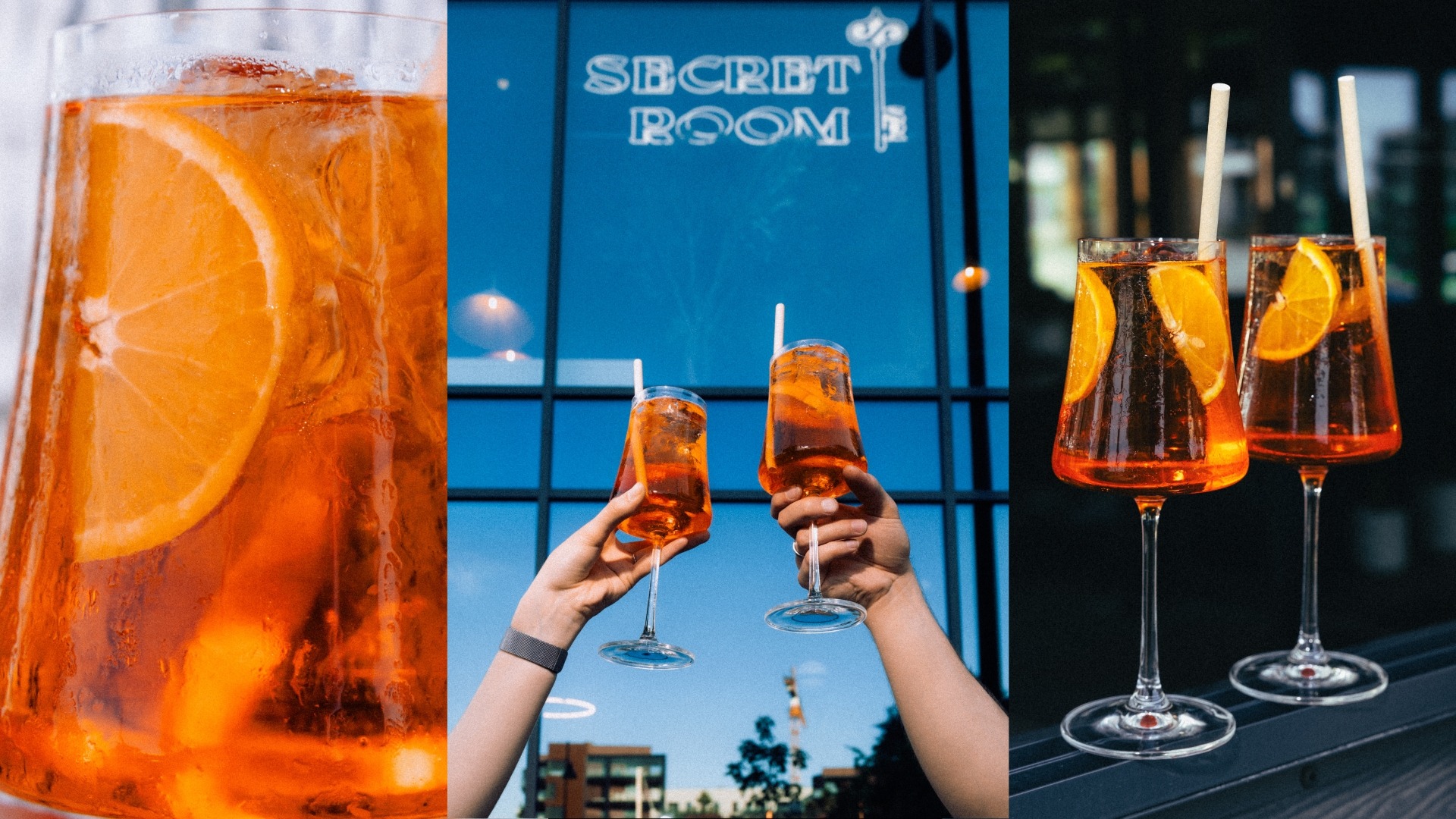
Summer offers at the Secret Room bar
Through the summer, the bar menu revolves around ice and lightness, and each month a different drink takes the lead. We pulled together a full roundup of refreshing cocktails for the heat in a separate piece, so here we cover what's on the card right now.
July: frozen daiquiri
July belongs to the frozen daiquiri. We serve it over a generous heap of crushed ice, so it holds the cold as long as possible on a hot evening. Three house flavors are on the card, all built on white rum and citrus syrup:
- Strawberry Daiquiri with strawberry purée,
- Watermelon Daiquiri with watermelon and pomegranate syrup,
- Tropic Daiquiri with passion fruit and mango purée.
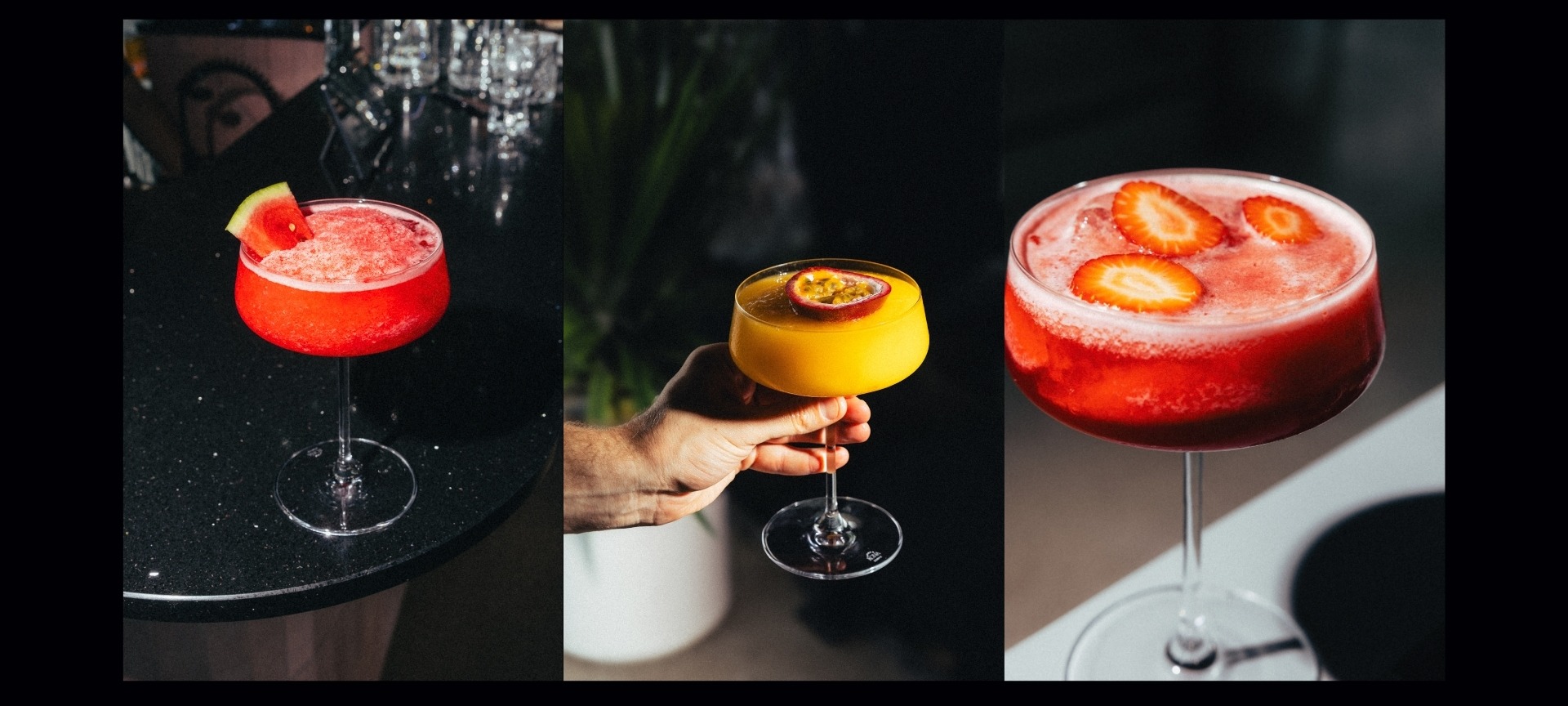
The texture runs thicker than a regular drink, closer to a frozen dessert, so you take your time with it.
August: Amore Aperol
In August, Aperol steps in, and we lean into the feel of Italian aperitivo and long, warm evenings. Amore Aperol brings three takes on the Aperol Spritz, each for its own summer mood:
- Classic Aperol Spritz in its original build of Aperol, prosecco, soda water, and a slice of orange,
- Hugo Aperol, which adds elderflower, mint, and lime and turns lighter and more floral,
- Berry Aperol Spritz with berry purée that steers the drink toward fruit over the same dry base.
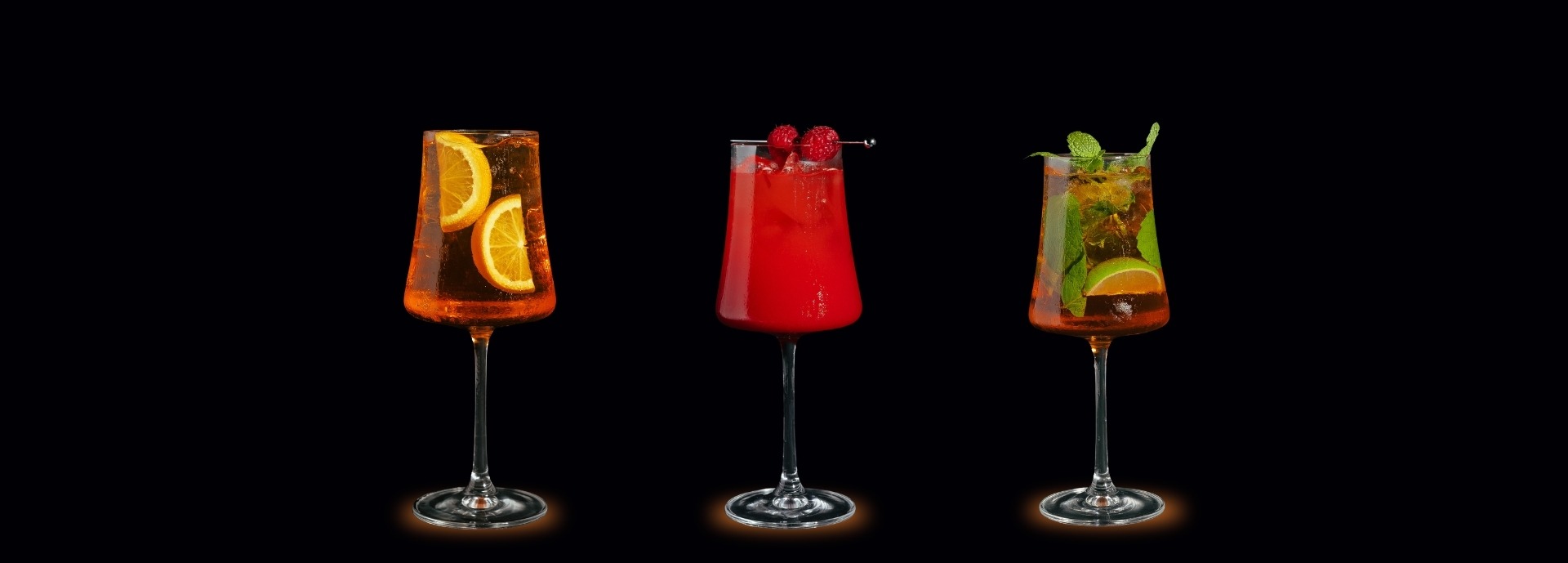
Aperol's lower strength and the prosecco bubbles make this a pick for the end of a hot day, when anything strong would be too much. It tastes best on the terrace over the Motława, as the sun drops toward the river.
Italian flavors expanding in Poland
The growing popularity of Aperol in Poland shows our openness to new tastes and traditions. Young Poles eagerly experiment, seeking alternatives to beer or vodka.
Aperol represents a window to Italian culture for Polish consumers, an invitation to discover new flavors and ways of spending time.
This orange liqueur serves as more than alcohol – a key to understanding Italian life philosophy, where food and drink become pretexts for building relationships and celebrating every moment. Reaching for classic Aperol Spritz or a signature prosecco cocktail matters less than who we share these experiences with. The best cocktails are those drunk in excellent company.
Every glass of Aperol Spritz transports us momentarily to the Adriatic shores, where the sun shines longer and life flows more slowly. This might be exactly what we need - a more Italian approach to life, more aperitivo in our daily routine.
An Exceptional Evening in Gdańsk!
Reserve a table at Secret Room!